My Projects
I have designed, helped to implement and follow several regenerative projects around the world. Here you find a selection of these, including vegetable farms, community gardens and private smallholdings.
Costapiana Farm
Vicenza, Italy
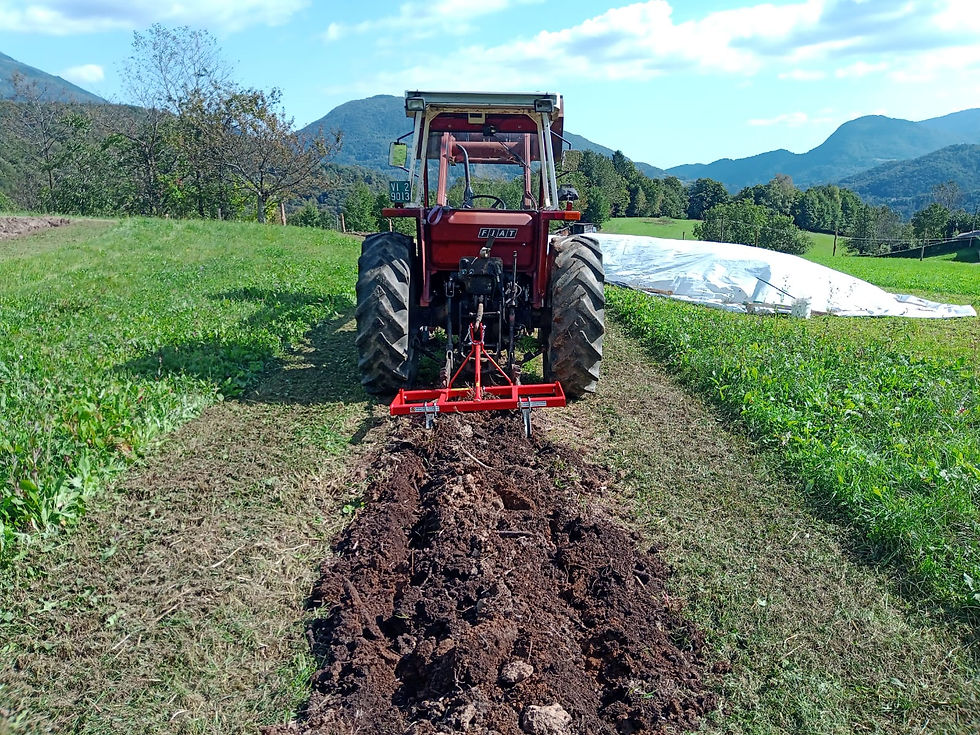
A multi-disciplinary co-design project to regenerate an abandoned mid-mountain landscape (600m altitude), integrating agriculture into a newly formed co-housing community.
My role in this collaborative project focuses on developing a complex, successional agroforestry system and offering training on its management.
The design integrates multi-layered tree plantings with biointensive market gardening and small fruits in the inter-row spaces. Rather than focusing solely on fruit yield, the system is engineered to provide critical ecosystem services—slowing rainwater, reducing erosion, building soil organic matter, and creating functional biodiversity within a resilient agro-silvo-pastoral model.



Orto del Sorriso
Ancona, Italy
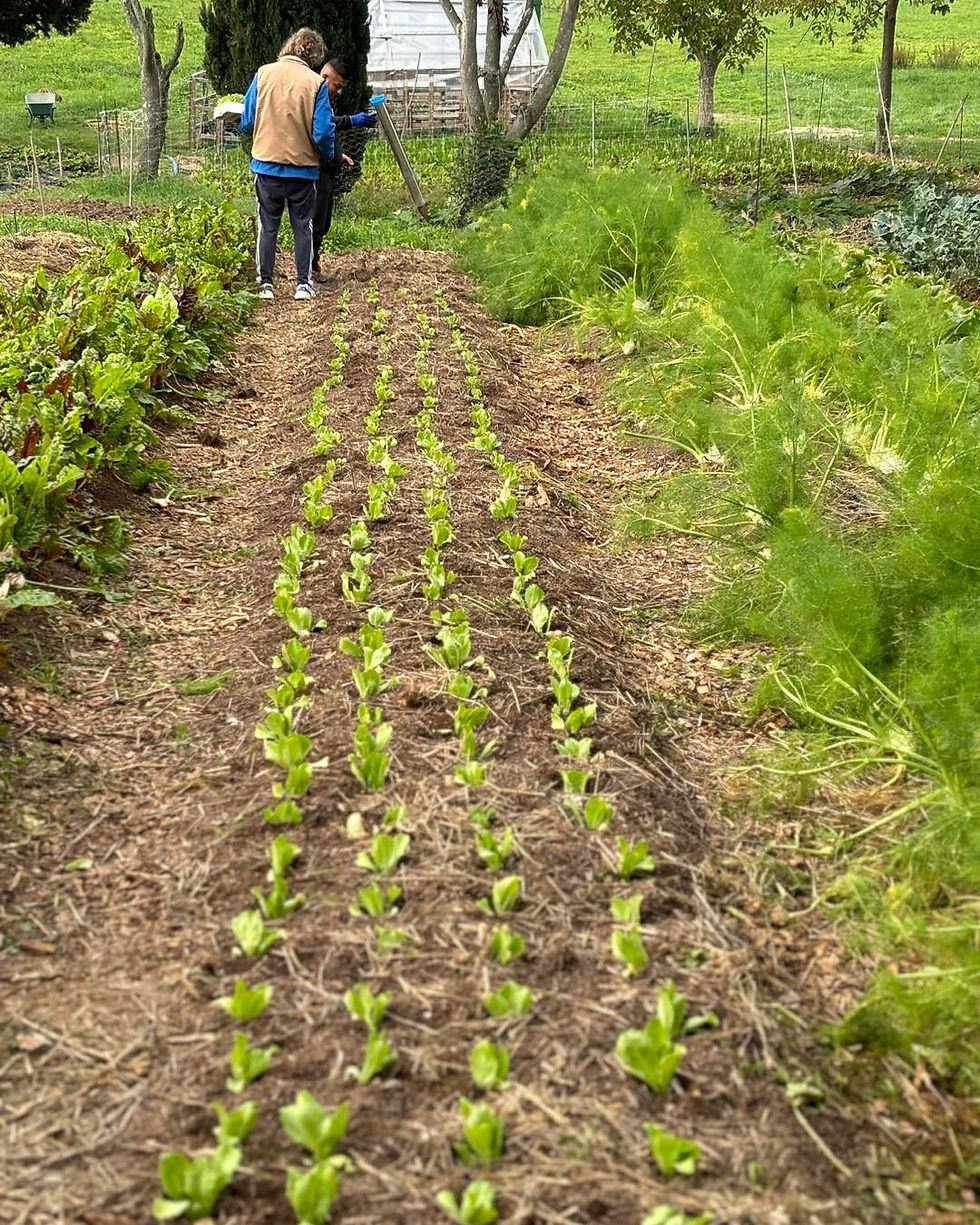
A social agricultural cooperative dedicated to the socio-occupational reintegration of vulnerable individuals. Producing fresh vegetables for direct local sale and home delivery, the project needed technical refinement to optimize its yield and daily operations without losing sight of its primary social and human mission.
My work focused on elevating the efficiency and ecological health of their no-dig market garden. I provided hands-on support to streamline overall management, refine crop selection for their farm shop, and optimize seasonal sequencing. By implementing targeted soil fertility protocols, we ensured the vegetable beds remain highly productive, manageable, and resilient—creating a system that sustains both the land and the people working it.
Emergence Institute
Whidbey Island, Washington, USA
An environmental educational retreat center set on a pristine, forested landscape in Washington State. Rooted in the mission of the Kalliopeia Foundation and Emergence Magazine, the center required a food production system that fully embodied their ethos of ecology, culture, and deep relationship with the living world—designed to sustain both the land and the guests attending their residencies.
Collaborating closely with the Institute’s gardens manager, I co-designed a highly productive, human-scale landscape. We established a biointensive no-dig vegetable garden seamlessly and a successional, syntropic agroforestry system. The design prioritizes biological soil health and closed-loop fertility, ensuring the gardens not only provide vital, hyper-local nourishment for the retreats, but also serve as a living, educational model of regenerative stewardship.


Serendipity Farm
Devon, England
A 3-acre property featuring a small valley, vigorous hedgerows, left unmanaged as a hay field for decades. The owners wanted to regenerate the land to produce a diverse range of plant-based foods, requiring a low-maintenance, perennial-focused system since they cannot be present on-site full time.
To rapidly trigger ecological succession, I designed a system of mixed agroforestry rows positioned along the landscape's keylines and contours to optimise water distribution and prevent erosion. The design functions as a linear forest garden, integrating three distinct layers of fruit trees, berry shrubs, and perennial vegetables, supported by heavily pruned nitrogen-fixing "service plants" to generate on-site mulch and build soil fertility. I also provided a Savanna-style planting pattern for grazing areas and integrated plans for no-dig vegetable beds between the tree rows.
Other projects
Around Italy
An environmental educational retreat center set on a pristine, forested landscape in Washington State. Rooted in the mission of the Kalliopeia Foundation and Emergence Magazine, the center required a food production system that fully embodied their ethos of ecology, culture, and deep relationship with the living world—designed to sustain both the land and the guests attending their residencies.


Other projects
Around England
A 3-acre property featuring a small valley, vigorous hedgerows, left unmanaged as a hay field for decades. The owners wanted to regenerate the land to produce a diverse range of plant-based foods, requiring a low-maintenance, perennial-focused system since they cannot be present on-site full time.